
Top Dentist Serving the Aurora Community
Root Canals
Quality Root Canals in Aurora
Toothaches are a vivid reminder that teeth aren’t just pieces of hard tissue floating around in the gums. They are intricately formed sensory organs with layers of dentin and enamel protecting a living pulp. Coursing through the tooth’s pulp is a vital bundle of nerves and blood vessels providing nutrients and sensation to each tooth.
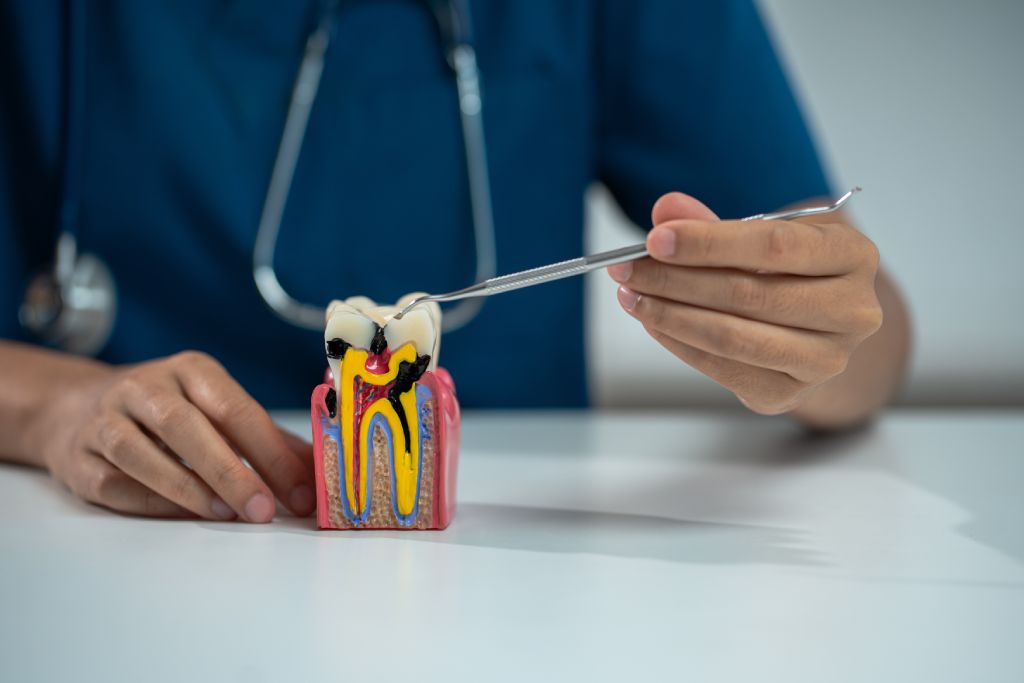
As long as the pulp stays healthy, you’re rarely aware of the systems at work.
Tooth pain can be especially alarming, but it’s meant to warn you that something’s not right. Pain tells us that the bundle of nerves and vessels inside your tooth is irritated, damaged, or under attack.
A deep cavity can give bacteria access to the inner nerve bundle. In some cases, a significant infection, called an abscess, may develop in your jaw without any symptoms at all. If Dr. Zhu determines that the nerve won’t recover or if an infection is present, then root canal therapy may be suggested.
Modern anesthetics provide powerful numbing for the gentle removal of the inflamed nerve inside the tooth. The nerve canal undergoes disinfection and careful shaping, and a sealer fills the internal space. A filling or crown over the tooth helps return the tooth to its original function.
Are Root Canals Safe?
Internet articles continue to circulate claiming adverse health effects from root canals, despite years of research proving otherwise. Many of these claims rest on false theories put forward decades ago without any scientific basis. In fact, one popular Facebook article sounding a false alarm shakily rests on a 100-year-old study tossed aside long ago.
The American Association of Endodontists stays abreast of all research and can support the safety of this vital service. In fact, new techniques and materials make root canal treatment more successful than ever.