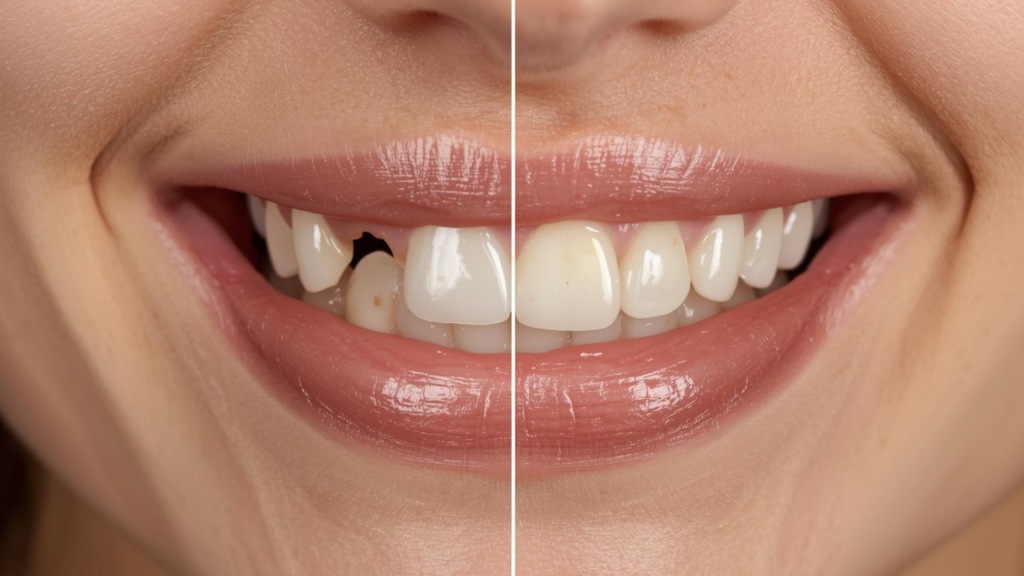
Your front teeth do more than help you chew. They are the first thing people notice when you smile, speak, or laugh. When a front tooth is cracked, decayed, or visually damaged, the impact goes beyond oral health and touches confidence in everyday moments. A front tooth crown restores both the function and the appearance of a compromised tooth, and when it is done well, nobody should be able to tell it is there.
For families across Aurora, from Hampden Heights to the neighborhoods surrounding Utah Park and Villages East, SMYLE Dental Design (Formerly Miyamoto Family Dental) offers front tooth crown restorations built around natural aesthetics and lasting results. Here is what you need to know before your consultation.
What Are Front Tooth Crowns?
A dental crown is a custom-made cap that fits over a damaged tooth, restoring its shape, strength, and appearance. When placed on a front tooth, the stakes for how natural it looks are considerably higher than for a crown tucked away on a back molar.
What Makes Front Tooth Crowns Different?
Front teeth sit in the most visible part of your smile, so every crown placed there must satisfy two standards simultaneously: it has to function properly and it has to look like it belongs. That means matching the exact shade, translucency, size, and surface texture of the teeth around it.
Front teeth also experience different forces than molars. Rather than grinding and crushing food, they do most of their work in biting and tearing. That means a front tooth crown does not need to be as thick or as heavily reinforced as a back crown, which actually gives the dentist more flexibility to prioritize aesthetics in the material selection.
When Do You Need a Crown on a Front Tooth?
Several situations can lead your dentist in Aurora, CO to recommend a crown rather than a simpler fix:
- A crack or fracture that extends into the structure of the tooth
- Severe decay that has consumed too much of the natural tooth for a filling to hold
- A tooth that has had root canal treatment, which can make the tooth brittle over time
- A large, aging filling that has failed or is at risk of failing
- A cosmetic restoration where a veneer is not a structurally appropriate option
If you are near Dam East or the area around the Kennedy Golf Course and noticing sensitivity, visible damage, or discoloration on a front tooth, early evaluation makes a meaningful difference in how many treatment options remain available to you.
Best Materials for Front Tooth Crowns
Material selection is where front tooth crowns get interesting. Because appearance is the primary concern, your dentist will guide you toward materials that replicate the look of natural enamel rather than materials chosen purely for strength.
Porcelain Crowns
All-porcelain crowns remain the gold standard for front tooth restorations. The material mimics natural enamel in the way it reflects and transmits light, which is what gives teeth their subtle depth and warmth. Porcelain can be layered and sculpted to create surface detail that matches the character of your surrounding teeth, including slight variations in color from the gum line to the tip of the tooth. For patients near Heather Ridge and Villages East who prioritize a seamlessly natural result, porcelain is typically the first recommendation for anterior teeth.
Zirconia Crowns
Zirconia has grown significantly in popularity for front teeth over the past decade. It is exceptionally strong, which matters for patients who grind their teeth or have a heavy bite even on their front teeth. Modern high-translucency zirconia has overcome the opacity problems that made earlier versions look flat and artificial. Today, a well-crafted zirconia crown for a front tooth can be virtually indistinguishable from natural enamel, and it will likely outlast an all-porcelain crown.
Porcelain-Fused-to-Metal (PFM) Crowns
PFM crowns have a metal substructure with a porcelain exterior. They are durable and have been a reliable standard in dentistry for decades. The aesthetic limitation is that over time, as the gum line naturally shifts with age, the dark metal collar at the base of the crown can become visible. For this reason, many dentists now steer patients toward all-ceramic or zirconia options for front teeth, reserving PFM crowns for situations where there is a specific clinical reason to use them.
Which Material Looks Most Natural?
Both porcelain and high-translucency zirconia can produce front tooth crowns that are difficult to distinguish from natural teeth. The practical difference comes down to your specific situation. Porcelain offers the most refined aesthetic customization and is ideal when the goal is an exceptionally lifelike result. Zirconia is the better choice when durability is also a priority.
Color matching is as important as material choice. Using a dental shade guide, Dr. Zhu carefully evaluates the color, saturation, and brightness of your adjacent teeth before the crown is fabricated. For complex cases, custom instructions are sent to the dental laboratory so technicians can layer and characterize the porcelain or zirconia to exactly match your natural smile.
Front Tooth Crown Procedure
Step 1: Consultation and Smile Evaluation
Your appointment begins with digital X-rays and a thorough clinical exam to assess the health of the tooth and the surrounding bone. Shade matching takes place at this stage while the tooth is still intact and can be compared naturally to neighboring teeth. Dr. Zhu uses this information to develop a treatment plan that accounts for both the structural and cosmetic goals for your specific smile.
Step 2: Preparing the Tooth
The tooth is reshaped to create room for the crown without making it look bulky once placed. Any decay is removed, and the tooth is cleaned and smoothed. Digital or physical impressions capture the precise dimensions of the prepared tooth and the surrounding bite, which the laboratory uses to fabricate your permanent crown.
Step 3: Temporary Crown
While the permanent crown is being made, a temporary crown is placed to protect the prepared tooth. It keeps the tooth stable, prevents sensitivity, and maintains the appearance of your smile in the meantime. Temporaries are designed to be removed easily at your follow-up appointment.
Step 4: Final Crown Placement
When the permanent crown arrives from the lab, it is tried in and evaluated for fit, shade, and how it interacts with your bite. Minor adjustments can be made chairside. Once both you and Dr. Zhu are satisfied with the result, the crown is permanently bonded into place.
How Natural Do Front Tooth Crowns Look?
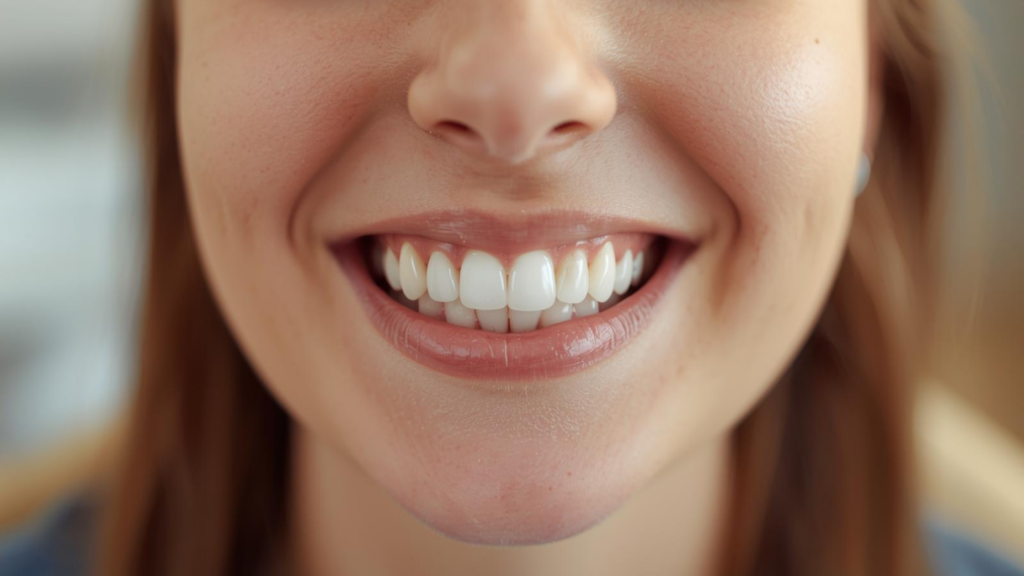
Patient concern about how a crown will look is completely understandable. The good news is that modern techniques and materials have made it genuinely difficult to detect a well-made crown on a front tooth.
Modern Crown Technology
Digital design tools allow dentists and laboratory technicians to create crowns with a level of precision that was not possible a generation ago. Layered porcelain fabrication techniques add depth and color variation that replicate the way natural enamel behaves in different lighting conditions.
Color Matching Your Natural Teeth
Shade matching is both a technical process and a clinical art. Beyond choosing a general shade category, Dr. Zhu evaluates the undertones in your natural teeth, how light passes through the enamel, and any characteristic variations in color. These details are communicated to the lab so the final crown integrates into your smile rather than sitting apart from it.
Can Anyone Tell You Have a Crown?
In most cases, no. A crown placed by an experienced cosmetic dentist using quality materials and precise lab fabrication should blend seamlessly with your natural teeth. Patients who come to SMYLE Dental Design from areas like Dam West and the community near the Gardens on Havana often express surprise at how natural their restored tooth looks once the permanent crown is seated.
How Long Do Front Tooth Crowns Last?
Longevity depends heavily on the material used and how well the crown is maintained over time.
- Porcelain crowns typically last 10 to 15 years with consistent care
- Zirconia crowns often reach 15 years or more, and in many cases longer
Factors That Affect Longevity
The lifespan of any crown depends significantly on daily habits and overall oral health. Consistent oral hygiene is the most controllable factor. Teeth grinding, known clinically as bruxism, creates force that can fracture porcelain crowns over time. A custom night guard can protect both the crown and your natural teeth from that kind of wear. Bite pressure also matters, which is why your dentist evaluates how a crown contacts opposing teeth before permanently bonding it. Routine dental visits allow Dr. Zhu to monitor the crown and catch early signs of wear before they become a larger problem.
Cost of Front Tooth Crowns
What Affects the Price
Front tooth crown costs vary based on several factors. The material you choose plays a significant role, with high-translucency zirconia and custom-layered porcelain typically sitting at a higher investment than basic options. Cosmetic customization, such as detailed characterization at the laboratory level, adds to the cost but also meaningfully improves the final aesthetic outcome.
The location of the dental practice, the technology used in design and fabrication, and the clinical complexity of your specific case all influence the final fee as well.
Does Insurance Cover Front Tooth Crowns?
Dental insurance often covers a portion of crown treatment when it is deemed medically necessary, such as following a root canal or when treating significant structural damage. Coverage varies widely by plan, and cosmetic motivations are typically excluded. The team at SMYLE Dental Design will review your benefits with you and discuss available options so that cost does not become a barrier to getting the care your smile needs.
Front Tooth Crown vs Veneer
This is one of the most common questions patients ask, and the answer depends on what is actually wrong with the tooth.
When Veneers Are the Better Option
A veneer is a thin porcelain or composite shell bonded to the front surface of a tooth. It is a conservative option that requires minimal removal of natural tooth structure. Veneers work well for teeth that are cosmetically imperfect but structurally healthy, such as teeth with staining that cannot be whitened, minor chips, slight spacing irregularities, or mild surface wear.
When a Crown Is Necessary
A crown becomes necessary when the tooth has been structurally compromised. If the tooth has a significant fracture, has undergone root canal treatment, has extensive decay, or has lost a large portion of its natural structure, a veneer does not offer enough coverage or support. A crown encases the entire visible tooth, providing protection and stability that a veneer simply cannot replicate in those situations. Choosing a veneer on a tooth that truly needs a crown can lead to premature failure and leave the underlying tooth at continued risk.
Caring for a Front Tooth Crown
Daily Care
Front tooth crowns do not require special tools, but they respond well to consistent habits. Brush at least twice daily with a soft-bristled toothbrush, paying close attention to the margin where the crown meets the gum line. Floss carefully around the crown each day to prevent plaque from building up in areas that a toothbrush cannot reach. Use a non-abrasive toothpaste to avoid scratching the crown surface over time.
Habits to Avoid
Certain habits put front tooth crowns at unnecessary risk:
- Nail biting places repeated stress on the crown edge and can chip porcelain
- Opening packages or tearing tags with your teeth is a common way crowns crack
- Chewing on hard foods like ice, hard candy, or crusty bread applies force that porcelain in particular is not designed to handle regularly
Patients living near the Cherry Creek Spillway and surrounding neighborhoods who play contact sports should also ask Dr. Zhu about a custom mouthguard to protect their restoration.
Front Tooth Crowns in Aurora, CO
Choosing the right dental team matters when a crown will be visible every time you smile. Patients at SMYLE Dental Design (Formerly Miyamoto Family Dental) receive care from a practice that treats cosmetic and restorative dentistry as a craft, not a transaction.
Dr. Zhu completes hundreds of hours of continuing education annually, well beyond what the profession requires, because dentistry evolves and his patients deserve care based on the most current techniques available. The majority of new patients at the practice arrive through referrals from existing families, which reflects something that marketing cannot manufacture: a track record of results people trust enough to recommend to the people they care about most.
Whether you are coming in from Hampden Heights, Utah Park, or a neighborhood near Korea Town, the team takes time to understand your goals, walk you through your options, and make sure you feel informed and comfortable before any treatment begins.
Schedule a Front Tooth Crown Consultation
A single evaluation appointment is often all it takes to understand exactly what your tooth needs and what your options are. Dr. Zhu will review your X-rays, discuss material choices that fit your smile and your lifestyle, and connect you with the team to review your insurance benefits and build a plan that works for you. Your smile is visible every day. It deserves care that reflects that.